From first product to utility operations: the BPS – SOTEX partnership
How a multi-year engineering collaboration supported Beacon Power Services through product development, a market pivot, and expanding operational requirements.

Ideas, industry perspectives, and lessons from building software for real-world challenges.
How a multi-year engineering collaboration supported Beacon Power Services through product development, a market pivot, and expanding operational requirements.
Especially when it comes to relational SQL databases? At Sotex Solutions, we help companies reduce their Azure infrastructure costs, with a particular focus on relational SQL databases and database-related spending. We are confident enough in our approach that we do not necessarily need to be paid by the hour. Instead, we are open to an outcome-based engagement where our compensation is tied to the savings we actually deliver.
A semantic model built for clinical search can become much more than a search component. This article explores how terminology harmonization evolved into a shared foundation for structured data capture, validation, selected business rules and application behaviour, and the engineering lessons we learned along the way.
Most teams approach STS certification as a final step. Our experience was different. A client request led us deep into the security layer of the STS ecosystem long before certification began. Although we ultimately built and certified a Vending System and Token Server, that early work gave us a deeper understanding of token generation, encryption, and system behavior. The result was a first-attempt certification pass and several lessons on preparation, scope, and system design.
A comparison of two approaches to large scale biomedical literature classification: LLM based classification and a hybrid architecture combining named entity recognition, ontology embeddings, and disease normalization. Using 38.6 million PubMed records, we evaluated throughput, cost, ontology alignment, and traceability, finding that hybrid pipelines remain the more practical choice for production scale, ontology driven systems.
This webinar walks through the full lifecycle of a medical AI system, starting from dataset creation and model training to deployment. It includes lessons learned from production systems, including performance optimization, error handling, and integration into existing workflows.
Clinical trials today run across a complex mix of systems. Data moves between Electronic Data Capture systems, Clinical Trial Management Systems, ePRO platforms, safety databases, and analytics environments. Without a shared structure, this exchange becomes slow, expensive, and error-prone. This is where ODM comes in.
Why is AI still off limits in so many regulated organizations? For healthcare, pharma, and energy teams, cloud-based LLMs raise serious concerns around data control, auditability, and compliance. This guide explains how private AI systems can run entirely inside your infrastructure, using your own documents to deliver secure, compliant insights. See how regulated teams are unlocking AI without sending data outside the firewall.
As software systems grow, architecture often struggles to keep up. This article reflects on our first architecture session with IcePanel, exploring why teams lose clarity over time and how shared models, practical tooling, and real project experience can help keep systems understandable as they evolve.
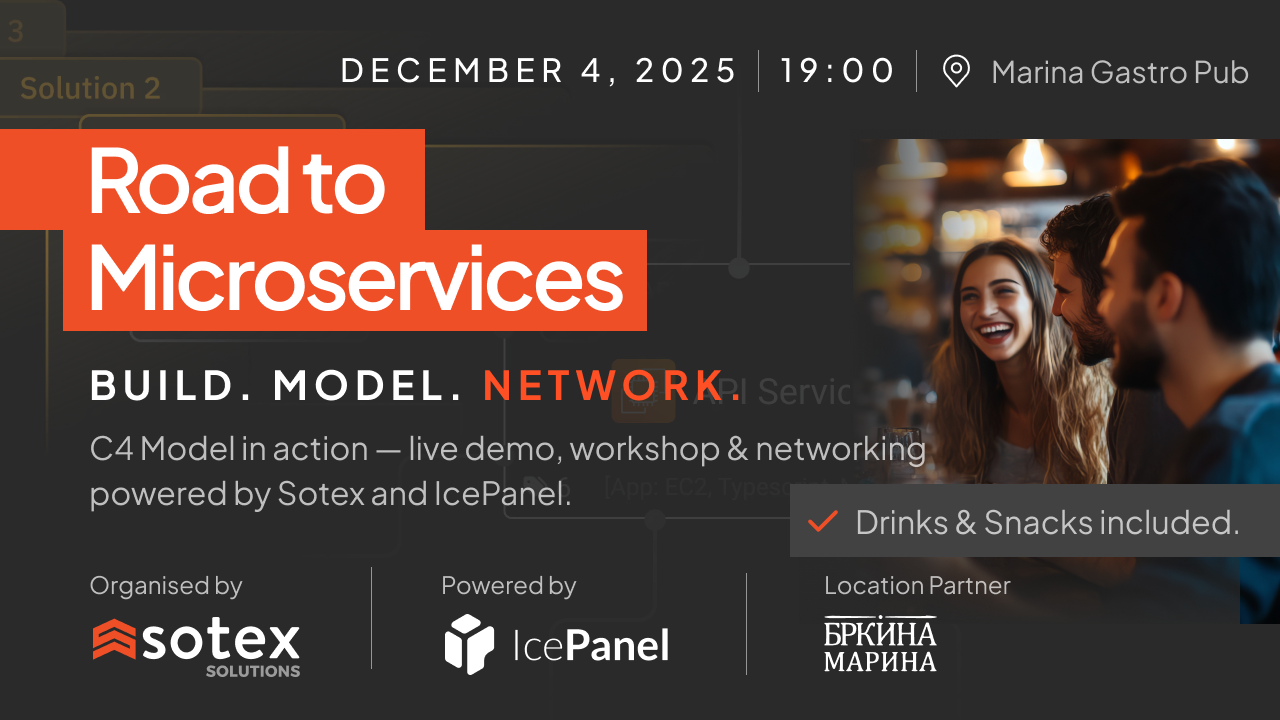
Road to Microservices is a hands-on evening event hosted by Sotex Solutions in collaboration with IcePanel, bringing together architects, developers, and tech leads to explore how the C4 Model and model-based architecture can simplify the transition to microservices. Through practical examples, live demonstrations, and open discussion, participants will learn how to maintain clarity, consistency, and scalability in complex software systems.
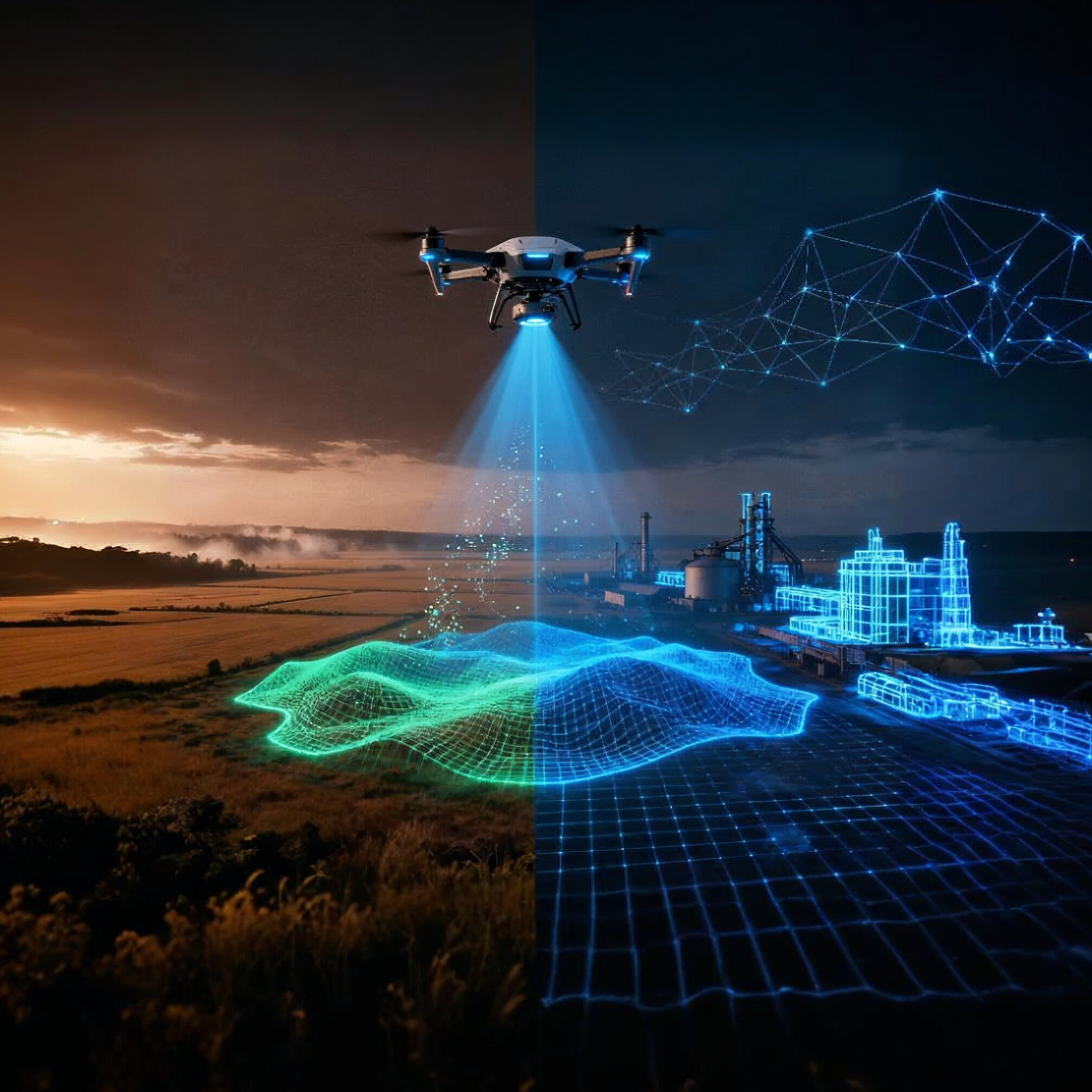
A single drone flight can now produce accurate, georeferenced 3D models of every asset — no manual work required. This article explores how Sotex Solutions and Beacon Power Services built an AI-powered module for CAIMS that automates object detection, coordinate computation, and 3D reconstruction with precision up to one meter, cutting survey costs by 70% and transforming asset management across industries
Here’s the truth: more developers don’t mean more speed. They often mean more chaos. When projects fall behind schedule, many teams turn to the most intuitive fix: add more people. On paper, it makes sense — more hands on deck should mean faster output. But in software development, the opposite is often true. Instead of accelerating delivery, scaling headcount usually slows things down and introduces risks that are far harder to recover from later.